

If you’ve been following along closely, I hope some of you are already yelling at your screens:
“Lance, we know the answer — it’s all based on expected value!”
And you’d be right. That alone would make me very proud.
But knowing that expected value is the answer and knowing how it actually plays out in real trading are two very different things. This is where nuance matters.
If you don’t know how expected value applies to trading, click HERE.
The Core Rule for Adding Size
When it comes to adding to positions, my guiding principle is simple:
I only add when the add would be justified as a standalone trade, independent of my existing position.
Moments of truly meaningful positive expected value are rare and extremely specific in time. They don’t last long.
These moments tend to occur:
- At exact breakout levels
- On clean breaks of prior bar highs
- Immediately following breaking news, as quickly as possible after the headline hits
Those are moments where expected value is at its peak — not moments of comfort.
Where Most Traders Get This Wrong
Most amateur traders add size because the trade is working.
They feel regret for not being bigger earlier. Their PnL is green. Their psychology is relaxed. And that’s exactly the trap.
The uncomfortable truth is this:
As most trades move in your favor, expected value is often declining, not improving.
In my experience, about 90% of newer traders add size at the most comfortable point, not the most profitable one. In doing so, they damage their average price and dilute a good trade by mixing it with mediocre — or outright bad — odds.
A great initial entry gets weighed down by poor adds.
What Proper Adds Actually Look Like
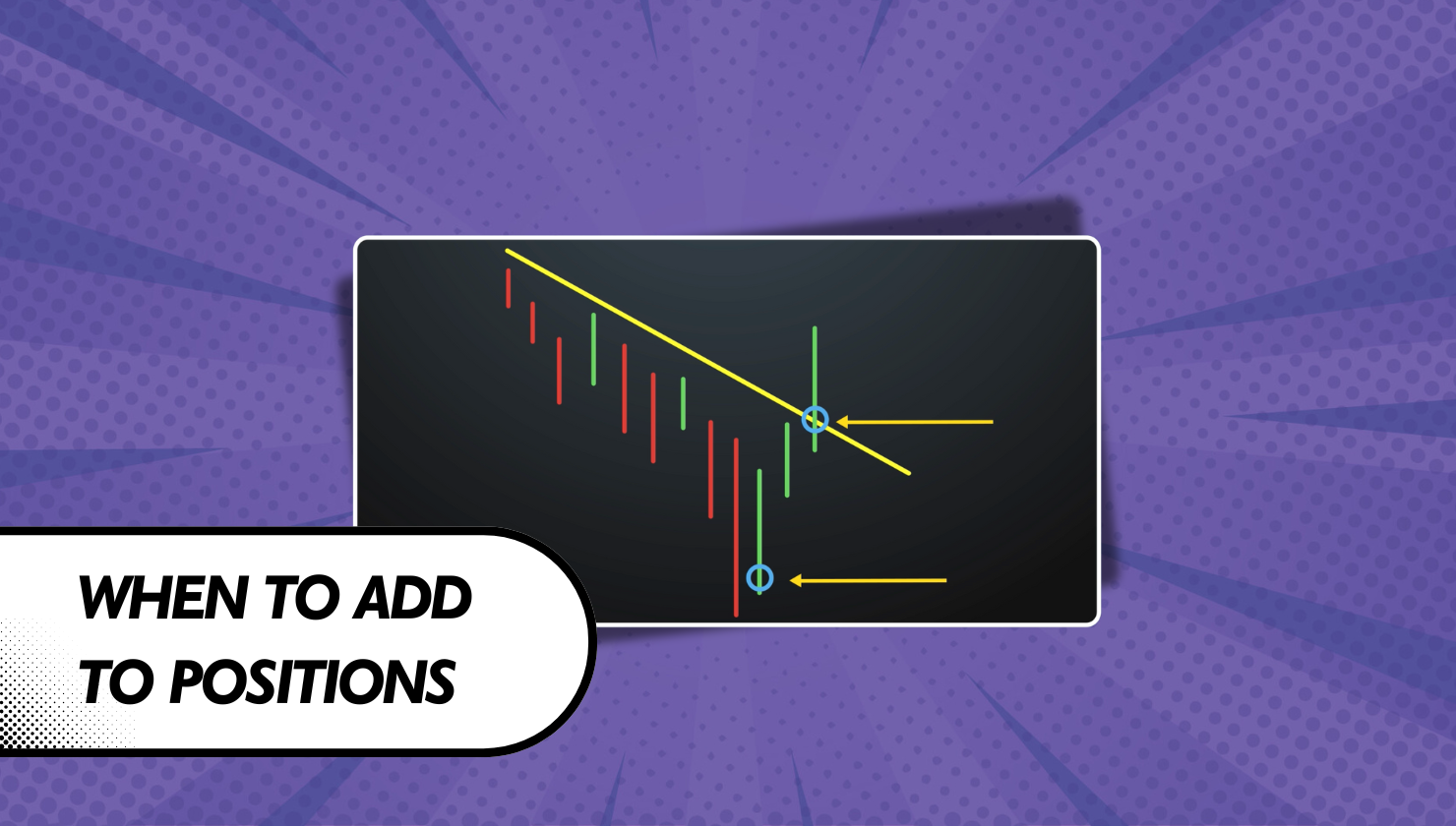
The only times I consider adding exposure are when the chart sets up in a way that, even if I had no position at all, I would still take the trade based on my system.

For example:
- In a mean reversion trade, I may initiate intrabar when expected value is extremely high
- Later, I might add on a confirmed trend break — such as a trendline break or a break of prior bar highs — only if expected value is still clearly favorable
And crucially, I would be taking that add even if I were flat.
Treat Every Add as Its Own Trade
Once I add, I treat each piece of the position independently.
- Swing size is managed by swing rules
- Scalp size is managed by scalp rules
They are not blended into one psychological mess.
What I see far too often is traders adding because it feels easy — then panicking because the worse average price forces them to exit the entire position before the true stop they should have been using.
That’s not risk management. That’s psychology hijacking math.
Psychology vs. Expected Value
At the heart of bad adds is this mistake:
Traders add where it feels good
Then exit where it feels bad
That sequence is almost guaranteed to produce poor results.
Instead of trusting the math, traders soothe regret, chase comfort, and then abandon logic under pressure. It’s a recipe for inconsistency and drawdowns.
When you think of each add as a clean, independent trade entry, everything becomes simpler:
- No obsession over average price
- No confusion about stops
- No emotional entanglement
The rules already exist — they’re in your playbook. The only thing that changes is whether you follow them.
A Data-Driven Reality Check
If you’re unsure whether your adds are helping or hurting, here’s a project you need to do.
Start tagging and reviewing your add trades — manually or using software like TraderVue.
Ask yourself:
- Are my adds profitable on their own?
- How does their expected value compare to my initial entries?
If your adds are losing money, they need to be cut immediately.
If they’re profitable but significantly less so than your initial entries, that’s still a problem. It likely means too much size is being allocated to lower-quality moments instead of peak expected value.
Most traders never do this kind of granular, uncomfortable analysis. But that’s exactly the work that creates real growth.
Why These Rules Exist
I didn’t come up with these rules because I was special or disciplined from day one.
I came up with them because I was doing the same garbage everyone else was doing — adding when it felt easy, not when it made sense.
My adds were quietly sabotaging otherwise solid trading. I only discovered that by doing honest, objective analysis of my own data.
Your optimal rules may not look exactly like mine. The only way to discover what works for you is to crunch the numbers and identify which entries carry the best expected value — and which are dragging you down.
Final Thought
If you’re reading this and quietly wondering whether your adds are hurting your performance, there’s only one solution.
Cancel your weekend plans.
Pull your data.
Do the work.
Expected value doesn’t care about comfort — and neither does long-term profitability.
Want to take the next step? Consider a daily routine for your trading.
