
Navigating the stock market can feel a lot like walking into a crowded casino. There’s constant activity, flashing lights, noise from every direction—price action mimicking the chimes of a hundred slot machines. Each opportunity appears enticing, every chart flicker suggesting the possibility of profit.
But just like in a casino, the reality is this: the house usually wins.
Casinos are built on one core principle—edge. Every game is carefully designed to give the house a statistical advantage. It might not win every hand, but over thousands of plays, the odds tilt in its favor. That same concept applies directly to trading: success doesn’t come from action for action’s sake—it comes from finding and exploiting true edge. (read more about trading edge here)
Not Every Ticker Is Worth Trading
One of the most profound lessons I learned early in my career came from working at a proprietary trading firm. During my time at Trillium, which spanned over a decade, we had internal dashboards that tracked performance across all the traders—over 100 highly skilled individuals making independent decisions daily.
What stood out the most?
Despite the universe of thousands of tickers, on any given day, only about one to five symbols consistently produced meaningful P&L for the entire floor.
Let that sink in. Less than 0.1% of available stocks provided the kind of edge that could be relied upon for actual profits.
The implications are enormous. Most of the market—literally 99.9%—is just noise. It looks like opportunity, feels like opportunity… but more often than not, it’s an expensive illusion. It’s price movement without purpose, like a slot machine giving just enough back to keep you pulling the lever. Add commissions, slippage, and spreads into the mix, and your coin-flip odds get even worse.
Edge Means Knowing When Not to Trade
A skilled trader isn’t someone who trades more—it’s someone who waits. Like a professional gambler avoiding rigged games, elite traders learn to sit on their hands when the market conditions aren’t right. They don’t chase every flashing light—they hunt for setups with a real probability advantage.
Let’s compare two charts to make this clearer.
Example 1: The Market on a Boring Day (SPY on April 2, 2024)
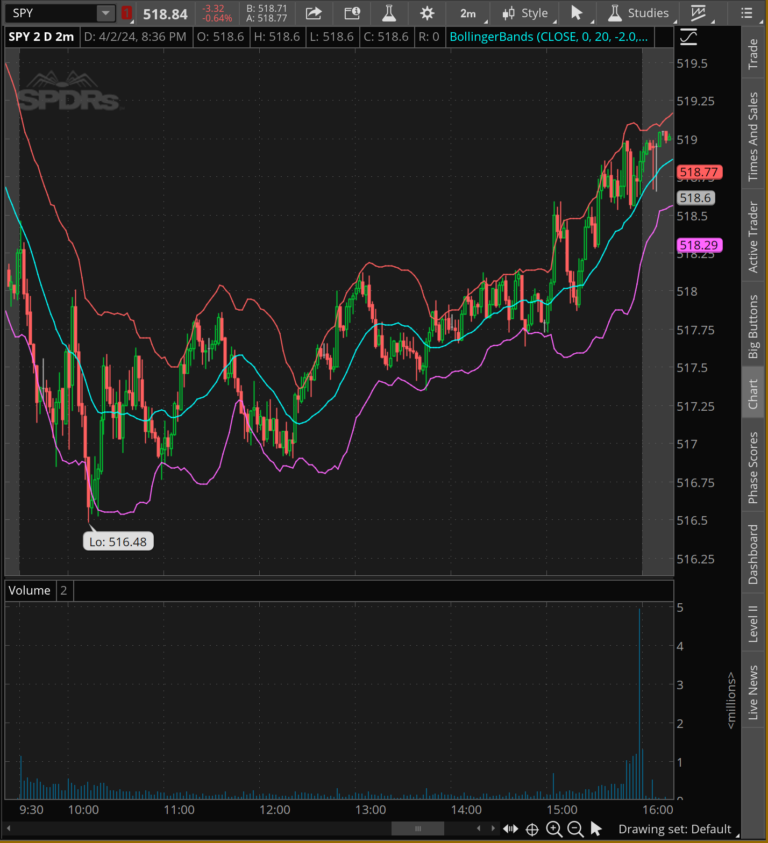
The SPY chart from this day is a perfect example of what I call “no man’s land.” There was no fresh news. Volume was low. Price action stayed trapped in a tight range, chopping around aimlessly without breaking to new highs or lows. It was textbook random noise—the kind of environment that tempts traders into overtrading, only to grind them down with mediocrity.
This is your casino slot machine. Flashy on the outside, but behind the curtain, it’s just a math equation that slowly bleeds your chips away.
Example 2: A High-Conviction Play (BMR on February 12, 2024)
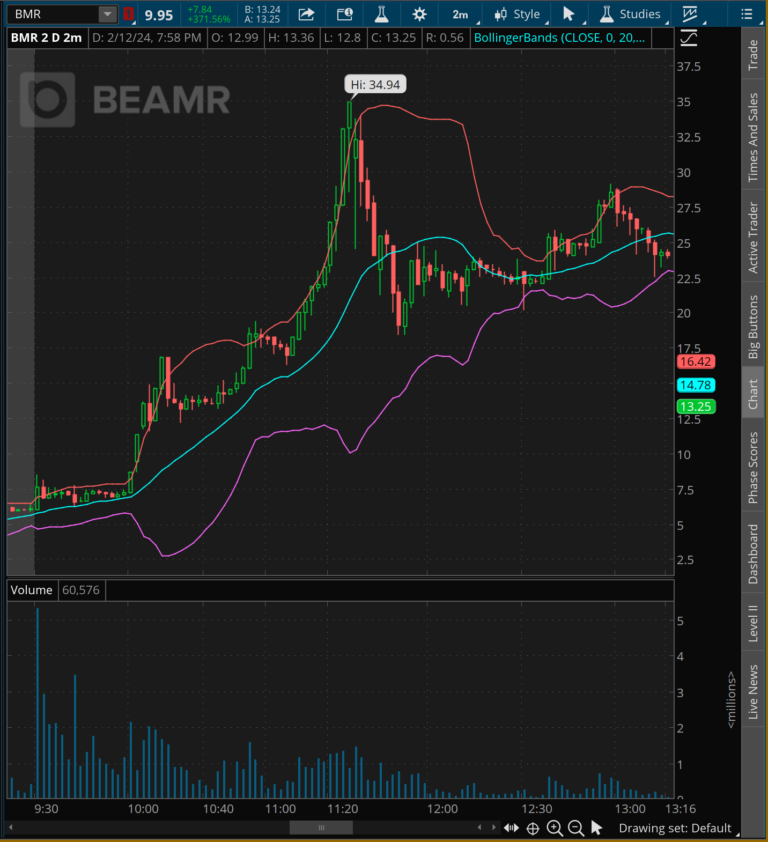
Now contrast that with BMR on February 12. That day, the company announced a major collaboration with NVIDIA—one of the hottest names in tech. It wasn’t just news; it was meaningful news tied to a strong market theme.
The result?
Massive volume. Clear technical levels. Big, clean moves with strong follow-through. In other words: real edge.
This setup wasn’t random. It was orderly chaos—price action that respected logic and responded to real catalysts. This is the equivalent of sitting down at a poker table, not a slot machine. If you know how to play the game, you have a genuine shot at winning.
Why This Is So Hard
This is where many traders struggle. The market constantly dangles bait—thousands of tickers, hundreds of setups, endless movement. It’s easy to fall into the trap of thinking more trades = more opportunity. But the truth is, more trades usually just means more exposure to noise.
That’s why elite traders focus on trading the right stock, at the right time, for the right reason.
They understand that edge is not universal—it’s contextual. A stock that offers opportunity today may be completely untradable tomorrow. Edge appears only under very specific conditions, and your job is to identify those conditions with discipline and precision.
If you want long-term success as a trader, you have to shift your mindset. You’re not here to react to noise. You’re here to hunt for signals—those rare, high-quality setups that align news, volume, technical levels, and sentiment.
