


One of the biggest turning points in my trading career didn’t happen behind a screen. It happened when I began managing the trading floor in Chicago. Suddenly, I wasn’t just responsible for my own performance — I was seeing dozens of traders make real-time decisions, and with that came patterns, mistakes, and behavioral tendencies that were impossible to ignore.
One of the most critical distinctions I observed — and one that cost many traders unnecessary losses — was the failure to differentiate between two very different types of trends:
Steady Strong trends vs. Capitulatory Moves.
Recognizing the difference is not just academic. It can be the key to avoiding devastating losses and identifying the highest-probability reversals.
Let’s break this down.
The Common Trap: Fading the Unfadeable
In the early days of my trading group, we made one mistake over and over again: we were fading moves based on how far they had gone — not how they were getting there.
We were fixated on percentage moves. If something was up or down “too much,” we assumed it had to mean-revert. But the reality is, a large move alone doesn’t tell you much. What matters more is how that move unfolds.
Does it move in a calm, measured way that suggests institutional accumulation or distribution?
Or does it explode like a stretched rubber band, over-extended and begging to snap?
That distinction changed everything for us.
The Key Lesson: Context Over Percentage
Let me walk you through two examples that helped solidify my thinking.
Example 1: Ford (F)
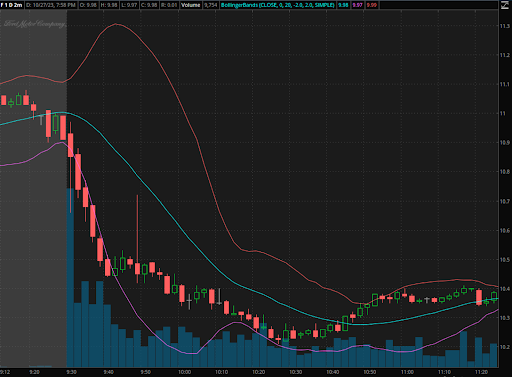
Let’s say Ford opens with a sharp drop from $11 to $10.65 — a big move at first glance. The impulse might be to fade this. But if you watch carefully, by 9:40 AM, the price action flattens. The candles start shrinking. Volume dies down. The slope of the move weakens. This is not a waterfall — it’s price acceptance.
And that’s a red flag if you’re looking for a reversal.
The initial drop had energy, but that energy fizzled. No panic, no volume climax, no overshoot. Instead of capitulation, we get a quiet drift lower. The market accepted the new price. And when that happens, trying to fade it becomes dangerous. There’s no reason for a snapback — because nothing is overstretched.
Bottom line: This kind of steady weakness is a trap for reversal traders.
The Flip Side: A Real Capitulation
Now contrast that with a ticker like LIFW.
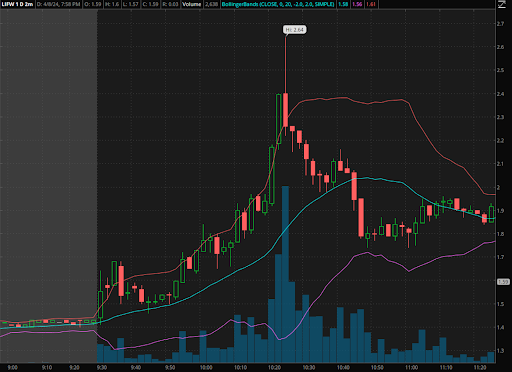
Around 9:50 AM, the trend is climbing — it’s steady, nothing alarming yet. But by 10:18 AM, the story changes dramatically.
- The slope of the trend steepens rapidly
- Candle size balloons
- Price stretches far outside of Bollinger Bands
- Volume spikes aggressively
This is what true capitulation looks like — a euphoric burst upward with unsustainable energy. It’s the exact opposite of Ford’s passive drift.
What follows? A sharp reversal.
Because when price detaches this quickly from moving averages, when volume goes parabolic, and when structure gives way to emotion — that’s when the rubber band stretches far enough to snap.
Case Study: AVGO – Two Days, Two Opposites
To drive this home even further, let me share a textbook back-to-back example from May 2023.
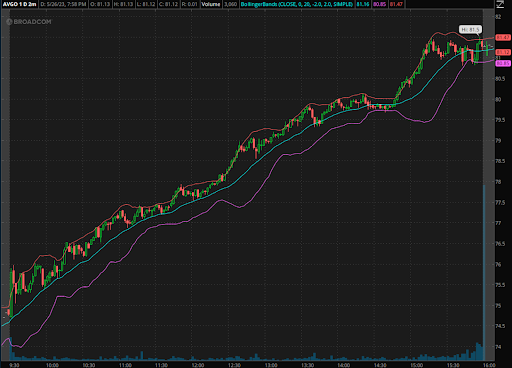
May 26 – Steady Strong
AVGO gaps up and starts climbing right out of the open. But look at the character of the move:
- The slope is consistent, about a 1:1 angle upward
- Candle size actually contracts over time
- The price hugs the moving average
- Virtually no time spent outside the upper Bollinger Band
That’s Steady Strong.
No blowoff top, no signs of exhaustion. And yet, I saw traders on Fintwit trying to fade this move — and getting run over. This wasn’t a parabolic rise, it was controlled, healthy strength. There was no logical short setup, and losses from fighting this trend were entirely avoidable.
May 30 – Capitulation in Full Effect
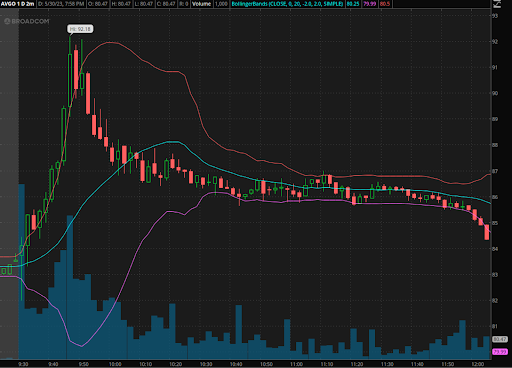
Now fast-forward one trading day.
AVGO opens strong again, but this time the behavior is radically different. The slope steepens rapidly. Candles grow with each bar. Price accelerates far outside the Bollinger Band and way above the moving average.
That’s euphoria — the textbook definition of a blowoff.
This type of move is precisely where I start preparing for a reversal. Not because of how far it moved, but because of how irrationally fast and stretched it became.
Developing the Right Framework
If there’s one concept I want you to walk away with, it’s this:
The market doesn’t punish you for being wrong — it punishes you for being stubborn and misreading context.
So how do you protect yourself? You build a framework for qualifying price action:
- Is the trend steady or violent?
- Are the bars growing or shrinking?
- Is price accepting a new range or rejecting it?
- Are you seeing price extension, volume climax, parabolic slopes?
The more you develop this pattern recognition, the more you can distinguish between a fade-worthy capitulation versus a no-touch steady trend.
Bonus Tips to Improve Your Trend Reading
1. Apply this framework to any timeframe.
These concepts are just as relevant on daily, weekly, and monthly charts as they are intraday. A stock can capitulate on the 5-minute chart or on the monthly — and you should know what both look like.
2. Use this to ride trends, too.
This isn’t just about avoiding short setups. It’s also about managing long trades. When I’m long and a move is behaving steadily, I want to stay in. But if it turns parabolic? That’s when I consider locking in profits before the inevitable reversal.
3. Practice with intention.
Here’s your homework: flip through random charts at the end of the day. For each one, ask yourself:
Is this consolidating?
Is this trending steadily?
Is this euphoric?
Is this capitulating?
Turn it into a game — the more you do it, the faster your brain will internalize these distinctions.
Traders often focus too much on how far a stock has moved — and not enough on how it moved there. But recognizing the character of price action — whether something is steady, euphoric, or exhausted — is a skill that can completely shift your edge.
It’s not about being the fastest or smartest. It’s about having the awareness to step back and say:
“Is this move sustainable — or about to snap?”
Get that right, and you’ll avoid unnecessary losses… and start spotting opportunities others miss.
Learn more about trading moves when they start to reverse in my article on the Right Side of the V!
