


If you’ve ever studied decision-making under uncertainty, you’ve probably come across the work of Daniel Kahneman and his book Thinking, Fast and Slow.
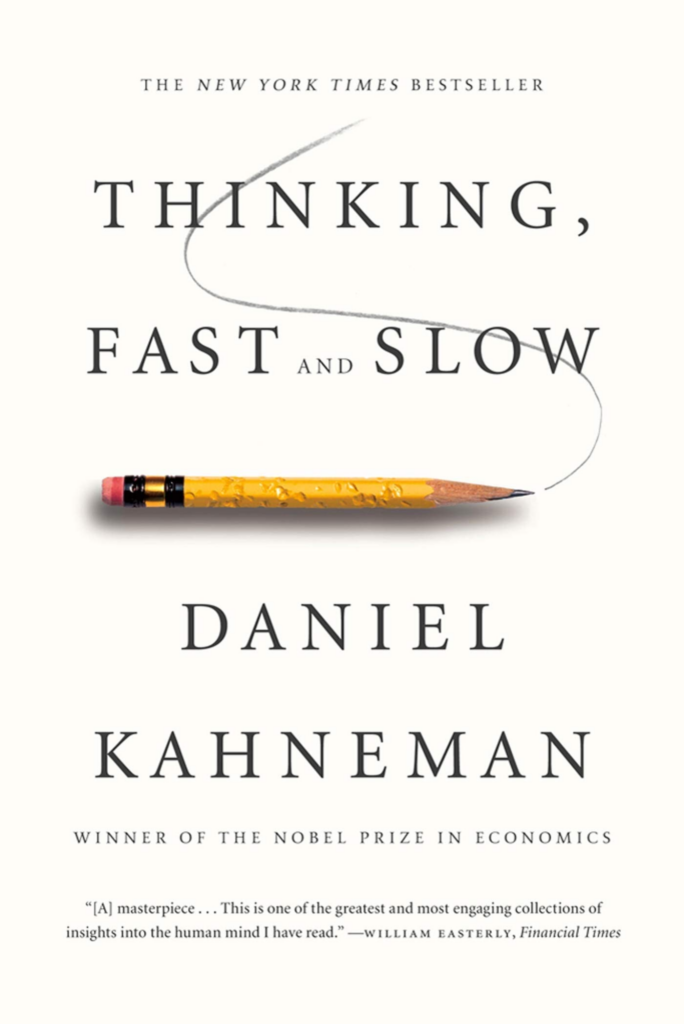
It’s one of the most important books ever written on how humans actually think — not how we assume we think.
One of the core ideas he introduces is the concept of heuristics.
At its simplest:
A heuristic is a rule of thumb your brain uses to make fast decisions under uncertainty.
It’s not perfect. It’s not always correct. But it’s efficient — and in environments like trading, efficiency often matters more than precision.
Because in real-time markets, you don’t get the luxury of perfect information or slow, careful analysis. You have to act with incomplete data, fast-moving conditions, and constant ambiguity.
That’s exactly where heuristics come in.
Why Heuristics Matter in Trading
What’s interesting is that over time, most experienced traders naturally develop them — whether they realize it or not.
After enough screen time and enough mistakes, your brain starts compressing experience into simple decision rules.
And when you start comparing top traders across different backgrounds, styles, and strategies, something surprising shows up:
A lot of them are using very similar mental shortcuts.
Not identical strategies — but shared behavioral rules that guide execution.
Universal Heuristics Among Top Traders
Some heuristics show up again and again across elite traders, regardless of style.
For example:
- The best trades usually go in your favor almost immediately
- The highest-quality setups feel obvious in hindsight — almost “too clean to ignore”
- Strong trades don’t spend much time proving you wrong first
These aren’t entry systems or indicators.
They’re pattern-recognition shortcuts based on thousands of hours of exposure to similar market behavior.
And the key idea is this:
Elite traders aren’t just reacting to charts — they’re reacting to familiarity patterns they’ve seen repeat over and over again. (Learn about the 20% heuristic here)
Personal and Firm-Developed Heuristics
Not all heuristics are universal. Many are developed through personal experience or within trading teams.
For example, one simple rule that emerged from shared experience in prop environments was:
“Don’t fight strong directional moves unless there is clear capitulation.”
In practice, that helps avoid repeatedly fading trends that are still structurally intact — a very common source of losses for developing traders.
Another personal heuristic I’ve found useful is:
“If you’re experiencing meaningful drawdown, something is wrong.”
This doesn’t always mean the idea itself is invalid. But it usually signals a deeper issue — timing, positioning, or execution — especially in trading environments where capital preservation is critical.
Because unlike long-term investing or portfolio management, trading doesn’t reward sitting through large adverse moves.
Drawdown is information. (Learn more about handling drawdowns here)
Heuristics Are Not Laws
It’s important to be clear about this:
Heuristics are not rigid rules.
They are compressed experience — shortcuts that generally improve decision-making, but can still fail in specific contexts.
Things like:
- “The trend is your friend”
- “The chart tells the truth”
- “Don’t overthink obvious strength”
These are all heuristics in disguise.
They help reduce cognitive load in fast-moving environments where over-analysis can actually hurt performance.
But they still need to be applied with judgment.
Developing Your Own Heuristics
One of the most underrated parts of trader development is the gradual formation of your own rules of thumb.
Over time, as you review trades and observe outcomes, you start to notice patterns like:
- What types of setups consistently follow through
- What conditions lead to failure
- What “looks good” but repeatedly underperforms
- What feels uncomfortable but tends to work
Eventually, those observations compress into simple internal rules that guide your execution without needing constant analysis.
That’s when decision-making starts to speed up.
Not because you know more — but because you’ve simplified better.
Final Thoughts
Heuristics are one of the quiet advantages of experienced traders.
They don’t show up on charts. They don’t appear in indicators. And they’re rarely taught explicitly.
But they shape how decisions are made in real time — especially when there’s no time to think deeply.
The goal isn’t to eliminate heuristics.
It’s to build better ones.
Because in trading, the quality of your rules of thumb often matters more than the complexity of your strategy.
And over time, those small internal rules are what separate hesitation from execution — and randomness from consistency.
